Kaj aba obiryakaro

Kaj aba obiryakaro

Cuidando la sangre de la tierra

Cuidando la sangre de la tierra

Traditional U’wa house surrounded by mountains and forest in Colombia.

Overview:

Overview:

Kaj aba obiryakaro is a documentary story directed by Marly Caceres Uncacia as part of El Buen Vivir, a multiplatform project led by CONCIP. Through the voices of U’wa thinkers from the Sierra Nevada del Cocuy, the film explores territory as a sacred space of life, knowledge and spiritual responsibility. It addresses the importance of protecting the land from threats such as oil exploitation and preserving the spiritual relationship between the U’wa people and Mother Earth.

Category:

Digital Marketing & Brand Strategy

Client:

El Buen Vivir / CONCIP

Duration:

6 months

U’wa man standing in front of the forested mountains of his ancestral territory in Colombia.
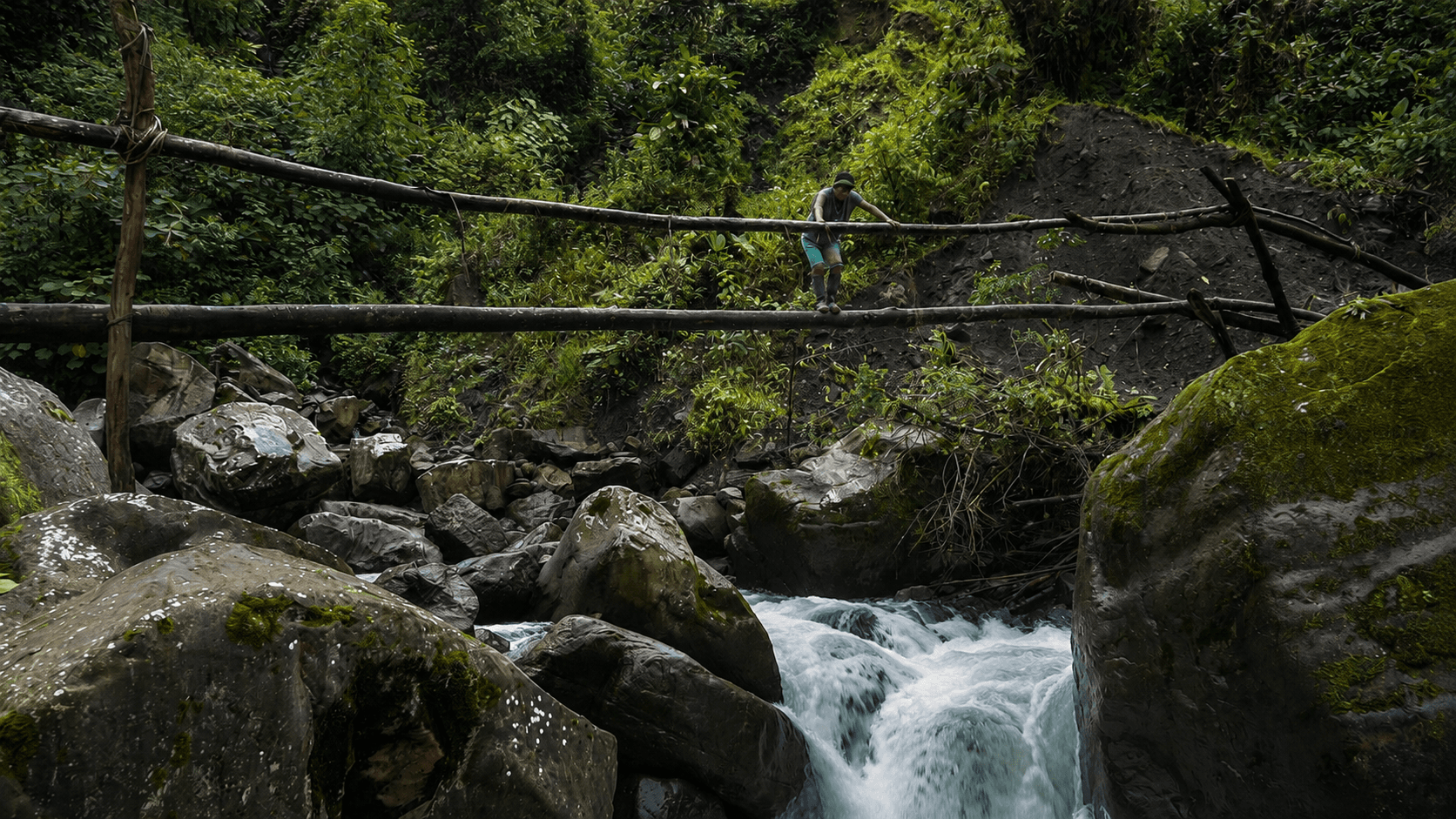
Person crossing a wooden bridge over a mountain river in U’wa territory.

Challenges

The central challenge was to translate a deeply spiritual and culturally specific understanding of territory into a documentary language accessible to wider audiences without simplifying or distorting the U’wa worldview. The process required careful listening, cultural sensitivity and an approach that respected the voices of the U’wa thinkers. The territory could not be treated simply as a location or visual backdrop, but as a living presence connected to memory, spirituality, identity and collective responsibility.

Conclusion:

Kaj aba obiryakaro presents territory not as a resource to be exploited, but as a living source of knowledge, memory and spiritual responsibility. By centering U’wa voices, the documentary invites audiences to reconsider the relationship between people, land and collective survival. As an U’wa filmmaker, I want to bring other ways of understanding the world into contemporary visual storytelling. My perspective allows me to create from lived cultural knowledge while building bridges with audiences beyond my community. This project reflects my approach to documentary filmmaking: listening deeply, respecting cultural context and transforming lived experience into stories people can feel, understand and remember.